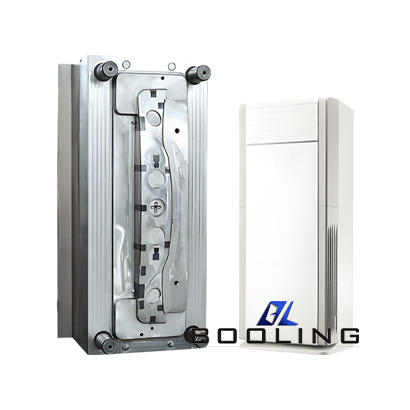
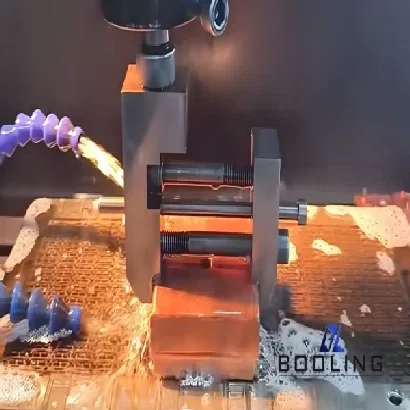
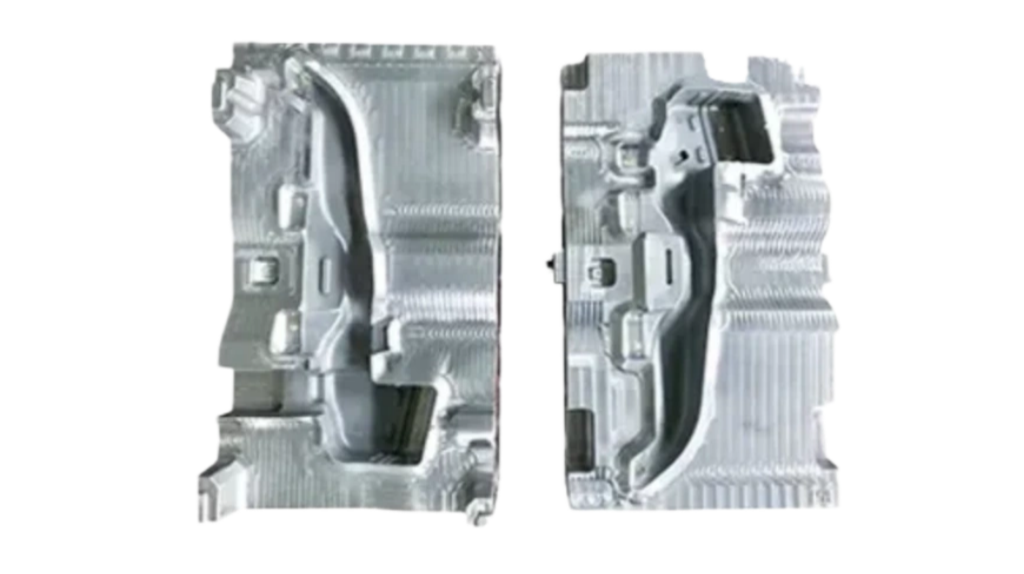
We offer mold manufacturing and plastic component production for a wide range of home appliances, such as refrigerator liners .
Blow Molds
We manufacture tools that achieve over 500,000 shots, an automatic demolding rate above 90%, and produce blow-molded parts with uniform wall thickness and precise forming.
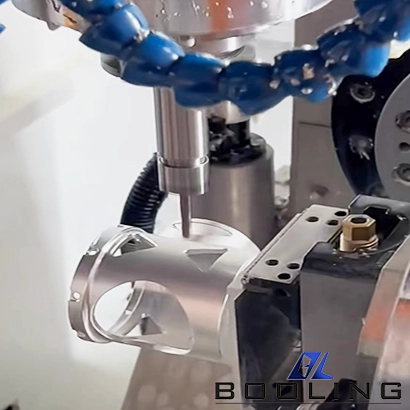
Booling’s lathe machining technology can be used to manufacture molds and components for multiple industries, and can also process a wide range of materials, from carbon steel to stainless steel, and more.
Booling offers comprehensive turning services with strong machining capabilities, high precision, and a high degree of automation. We are equipped with a wide range of turning machines, including conventional lathes, CNC lathes, mill-turn centers, specialized lathes, and multi-spindle lathes, to meet customer requirements for various batch sizes and levels of complexity.
Our lathes can process materials such as carbon/alloy structural steels, tool steels, stainless steels, and bearing steels, achieving a machining accuracy of ±0.05 and roundness error within 0.5 μm. Our turning services are ideal for components used in industries such as automotive and transportation, as well as mold manufacturing.
The Booling Assurance
Global Services
Access Booling's full manufacturing capabilities instantly. Wherever you are, we deliver solutions backed by technical expertise and global experience.
Available for immediate inquiry
Booling's intelligent system provides instant design assessment, delivering an accurate quote and reliable lead time—all within minutes.
Quality Assurance
Operating under ISO 9001:2015 and strict NDAs, our system provides clear visibility into project quality and progress—keeping your ideas fully secured.
Materials Used In Lathe Machining
Metal materials
carbon steel, alloy steel, stainless steel, cast iron, copper alloys (such as brass and bronze), aluminum alloys, titanium alloys, etc.
Plastics
nylon (PA), polyoxymethylene (POM), polytetrafluoroethylene (PTFE), ABS, acrylic (PMMA), etc.
Other materials
wood, engineering ceramics, composite materials (such as carbon fiber reinforced composites), etc.
Industries Using Lathe Machining
Custom Automotive Services
Our lathe machining technology can be used to manufacture high-precision components that are suitable for the automotive industry. Examples include cavity inserts, wheel hubs, and other parts.
Our lathe machining technology can be used to manufacture high-precision components that are suitable for the medical industry, such as scissor pivot shafts and dental tool handles, among other products.
Our lathe machining technology can be used to manufacture high-precision components that are suitable for the home appliance industry, such as fan shafts and various housing parts.
Our lathe machining technology can be used to manufacture high-precision robot components, such as sensor housings and joint shafts in the robotics industry.
rely on manual operation, utilizing the operator’s skill, the basic structure of the machine tool, and common cutting tools. Building upon traditional techniques, we have standardized operator training and safety protocols. You can choose to equip them with different centers, follower rests, or specialized turning tools to easily handle basic, small-batch machining tasks.
CNC Lathes
Through high-precision CNC systems, automated control systems, and multi-station turret combinations, they enable the automatic execution of complex part machining programs. We have upgraded the bed layout and guideway systems based on traditional technology, enhancing precision and chip removal performance. You can choose vertical, horizontal, or slant-bed structures to ensure effective machining of shaft, disc, and even complex rotational parts.
Turn-Mill Centers
primarily utilize multi-axis linkage and live tooling technology. By integrating a precision turning spindle, a high-speed milling electric spindle, and a multi-channel CNC system, they can complete various complex processes such as turning, milling, drilling, and tapping in a single setup.Depending on your needs, you can select Y-axis, sub-spindle, or automatic feeder configurations.We primarily offer three-axis, four-axis, five-axis, and higher linkage models.Can effortlessly achieve high-precision machining of complex surfaces and special-shaped parts.
Special-Purpose Lathes
essentially package together quick-clamping dedicated fixtures, optimized machining programs, and specialized tools to enable highly efficient mass production of specific parts. Booling has undertaken highly specialized and automated redesigns of machining cycles and clamping methods on universal platforms. You can equip them with automatic loading/unloading, in-process inspection, or multi-station rotary tables as needed, enabling rapid and high-precision mass production of specialized parts like camshafts and crankshafts.
The core technology of Multi-Spindle Lathes
By combining multiple independent spindles, multi-turret systems, and an efficient control system, they enable one machine tool to process a variety of different workpieces or multiple faces of a single workpiece. Booling primarily offers models equipped with two, four, six, or even more spindles, thus you can choose dual-spindle, four-spindle, or multi-turret configurations to achieve fast and high-precision parallel processing of large-volume parts.
Characteristics after lathe machining
Surface roughness
After lathe machining, the workpiece surface exhibits unique spiral tool marks, leading to anisotropic surface roughness (significant difference along and across the feed direction) and potential unevenness in different areas.
Burrs and turned edges
During turning, the cutting tool’s pushing action generates thin, flaky or curled burrs at the edges of the part (e.g., on end faces, grooves, or thread run-outs), especially pronounced in ductile materials.
Luster change
Due to cutting heat and frictional extrusion, the machined surface may show areas with color or brightness different from the original base material, such as dullness, increased reflectivity, or oxidation tints (e.g., bluish-purple).
Download more guides about our Lathe Machining Services to get more tips and resources.