Home > Injection Mold
Custom Online Injection Mold Services
Booling’s Injection Mold integrates high-precision design with intelligent manufacturing, providing efficient, stable molding solutions. Our molds deliver exceptional dimensional consistency, excellent surface finishes, and support automated high-speed production. We offer complete solutions tailored to your needs.
Booling's Injection Mold Services
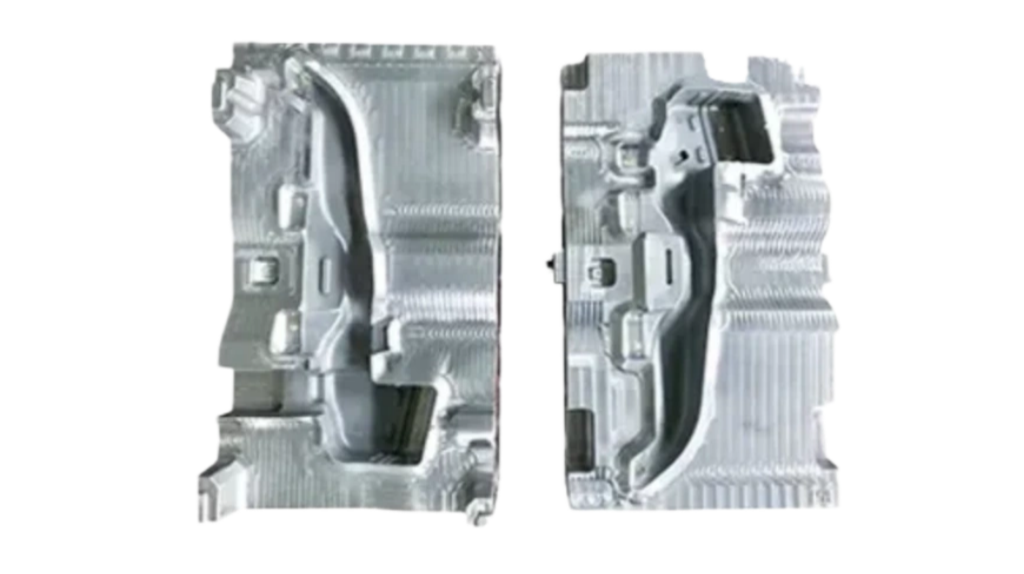
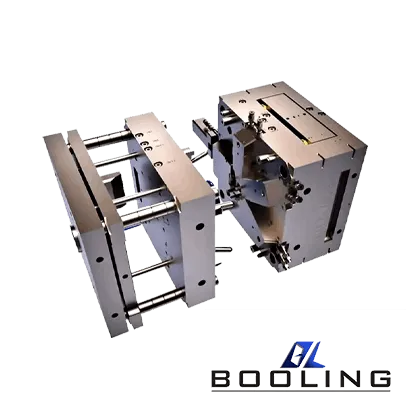
An injection mold is a tool used for injection molding.Our injection molding services provide the manufacturing of conventional injection molds, multi-color/two-color injection molds, gas-assisted injection molding (GAIM) molds, microcellular foam injection molding molds.
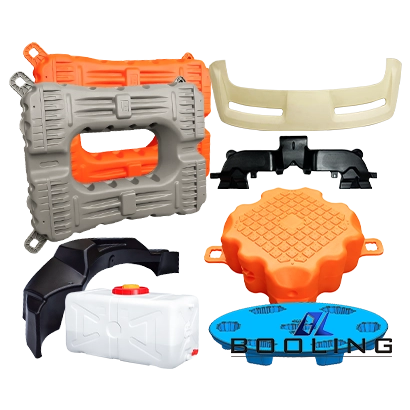
Booling’s injection molds serve industries such as automotive, daily necessities, and logistics. Our professional team also provides customers with one-stop custom mold services.
The Booling Assurance
Global Services
Access Booling's full manufacturing capabilities instantly. Wherever you are, we deliver solutions backed by technical expertise and global experience.
Available for immediate inquiry
Booling's intelligent system provides instant design assessment, delivering an accurate quote and reliable lead time—all within minutes.
Quality Assurance
Operating under ISO 9001:2015 and strict NDAs, our system provides clear visibility into project quality and progress—keeping your ideas fully secured.
How Can I Customize Injection Molds With Booling?
If you require a more precise, customized plastic injection molding solution, you can provide us with photos of your samples to help us understand the product’s overall appearance, key structural elements, and special processing surfaces, or send us complete 3D drawings (we support various formats, such as STEP, STL, and SOLIDWORKS).
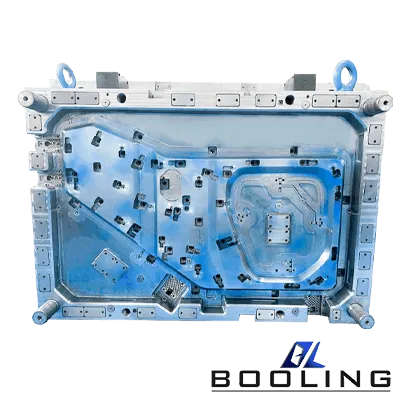
Processing Technologies Used In Manufacturing Injection molds
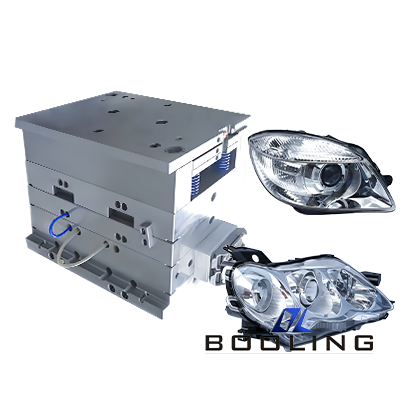
Automotive Industry
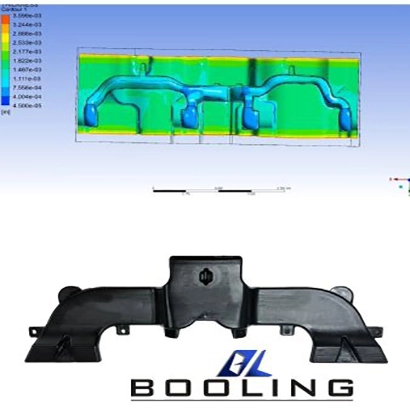
We manufacture molds for producing complex hollow components—such as automotive air ducts, pedals, and spoilers—using injection molding technology. We also offer custom mold manufacturing services.
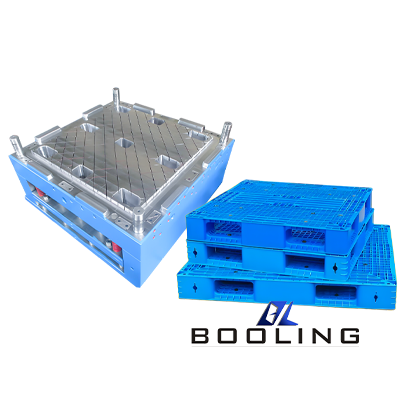
Logistics Industry
We use injection molds to produce injection-molded pallets, returnable bins, and various plastic containers. We also offer customization services.
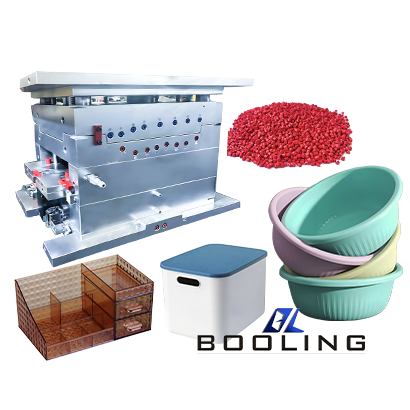
Household Mold Industry
We use injection molds to produce daily-use injection-molded products such as plastic chairs, storage boxes, and cups. We also offer customization services.
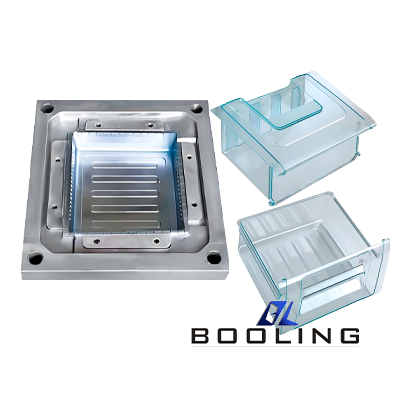
Home Appliances Industry
We use injection molds to produce household appliance injection-molded products such as refrigerator liners, washing machine housings, and air conditioner panels. We also offer customization services.
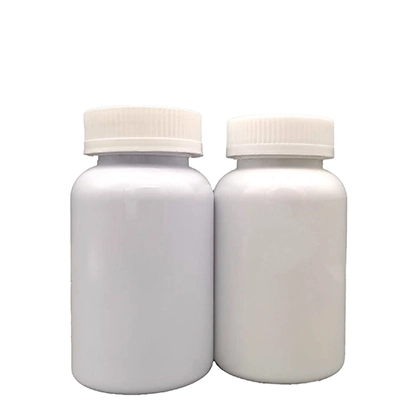
Medical Industry
We use injection molds to produce medical injection-molded products such as medicine bottles, test tubes, and petri dishes. We also offer customization services.

Robotic Industry
We use injection molds to produce robotic injection-molded products such as robot housings. We also offer customization services.
Whatever your needs, we have the solution.
Services Provided By Booling
With over ten years of extensive experience in the field of mold design and manufacturing, we can provide one-stop solutions from design and development to production and manufacturing, ensuring high feasibility, high precision, and stable mass production capability for the molds we produce.
DFM report
- Wall Thickness Analysis:To check whether the wall thickness distribution of the product is uniform.
- Demolding:Whether the demolding process goes smoothly.
Material Selection: Able to select appropriate materials based on the product’s functional and appearance requirements.
Assembly: To check whether there are any assembly issues when the product is assembled with other components.
Mold flow analysis
Optimize gate location :Determines the best position for injecting plastic into the mold to ensure complete filling.
Predict filling patterns :Visualizes the advancement of the melt front, identifying potential air traps and weld lines.
Cooling behavior : Evaluates temperature distribution and cooling time to reduce warpage and shorten cycle time.
Identify shrinkage and warpage : Predicts areas prone to sink marks or deformation after cooling and solidification.
Evaluate packing pressure : Assesses the holding pressure maintained during cooling to compensate for material shrinkage, sink marks, dimensional inaccuracies, or internal voids.
Reduce mold trial iterations : Minimizes the number of physical mold trials, saving both time and cost.
Mold design
If the customer requires our mold design services, we can provide them with complete 3D mold structure drawings and 2D machining drawings.
Mold trial
Defect Diagnosis and Troubleshooting: Identifying various defect issues that occur during the trial molding stage and eliminating them.
Comprehensive Inspection: Performing dimensional accuracy measurements, appearance checks, material property tests, and assembly trials on the samples.
Performance Testing: Evaluating the flow rate and pressure of the mold’s cooling system, the filling balance of the mold, and other relevant conditions.
Recording: Documenting all key molding parameters for the first batch of samples produced.
Small-batch production and sample delivery
Quality Inspection: We will randomly sample products from each batch of small-scale production to conduct comprehensive dimensional accuracy measurements, appearance inspections, and material property tests.
Defect Handling and Improvement: If any defects occur during the production process (such as bubbles, warpage, dimensional deviation, etc.), we will immediately conduct a root cause analysis for the customer and adjust the mold manufacturing process and other means until the defects are eliminated.
Sample Delivery: According to the customer’s requirements, we will clean, deburr, and apply rust-proof treatment to some samples, and use shock-proof and anti-static packaging to ensure no damage during transportation.
The delivered documents include: sample inspection report (including key dimensional data, appearance photos, material certificate), small-batch production parameter record sheet, certificate of conformity and quantity list. If the mold has been adjusted, we will also attach a mold modification confirmation form.
After-sales service
- Technical Training Services:Our technicians have professional skills and relevant knowledge to support online mold maintenance guidance, conduct rapid troubleshooting, and assist in mold processing and processing of difficult-to-process engineering plastic raw materials.
- Regularly inspect and evaluate the mold :our after-sales personnel can understand the customer’s usage in a timely manner and make corresponding suggestions.
- Repair & Warranty:We guarantee the quality of molds and provide first-level maintenance and second-level maintenance services. If you encounter any problems within the warranty scope, we will provide accurate and correct repair services to ensure that customers have the shortest downtime and quickly re-enter the production process.
Types of Injection Mold
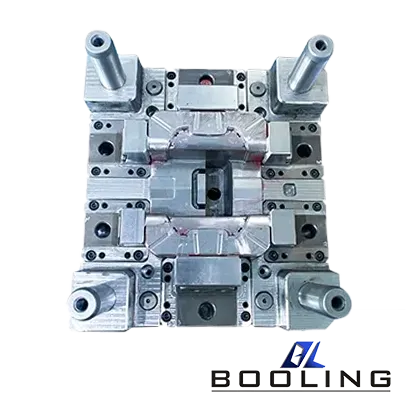
Booling offers various types of injection molds, including single‑cavity, multi‑cavity, hot runner, insert, and overmolding molds, to meet the needs of different products and application scenarios.
Single Cavity
Our single-cavity injection mold is the most basic technology we use for injection molding. In our injection molding production, it can produce precision plastic parts, making it especially suitable for products that require small-batch production.
Multi-Cavity
Our multi-cavity injection mold is an efficient technology we use for injection molding. In our injection molding production, it can simultaneously produce multiple precision plastic parts, making it especially suitable for products that require high-volume production.
Hot Runner
Our hot runner technology generates very little runner waste, achieves extremely high material utilization, and reduces material consumption.
Cold Runner
Our cold runner molds are not only low in manufacturing cost but also simple in structure and easy to maintain. Even when the mold needs color change or material replacement, the process is very convenient. For small‑batch, high‑mix production orders, cold runner molds are a very practical choice.
Two-Plate
Our two‑plate molds offer short cycle times and high production efficiency. They are compatible with most plastic materials and offer simple gate selection. Whether for small‑batch or large‑scale production, two‑plate molds are a practical choice.
Three-Plate
Our three‑plate mold features two parting lines. During mold opening, the runner falls away automatically without manual intervention. The finished products also have minimal warpage. Although the mold cost is slightly higher, its high degree of automation makes it ideal for high‑volume orders that demand excellent surface appearance.
Insert Mold
We place metal inserts or screws into the mold, then inject molten material. After cooling, they become firmly bonded together. This improves the strength and durability of the finished product. Moreover, using insert molds eliminates the need for secondary processing, which saves both time and production costs.
Overmolding Mold
The overmolding technology we use injects plastic material onto another pre-formed substrate. This not only saves our customers the hassle of assembly and reduces production costs, but also improves the performance of the finished product.
Technologies Involved In Manufacturing Injection Molds
CNC
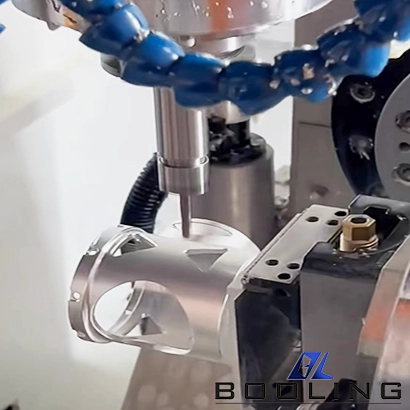
We use CNC technology to machine molds, which helps solve the difficulties encountered in mold manufacturing, such as complex curved surfaces, deep cavities, and small-diameter cores. After CNC machining, the molds achieve high dimensional accuracy and excellent surface finish.
Milling machine
We use milling machine technology to machine molds, which helps solve the difficulties encountered in mold manufacturing, such as complex curved surfaces, deep cavities, and small-diameter cores. After milling machining, the molds achieve high dimensional accuracy and excellent surface finish.
Lathe
We use Lathe machine technology to machine molds, which helps solve the difficulties encountered in mold manufacturing, challenges such as precision machining of external and internal diameters, and consistency in mass production.
Grinding machine
We use grinding machine technology to machine molds, which helps solve the difficulties encountered in mold manufacturing, such as machining hardened materials, achieving high-precision flat and cylindrical surfaces, and removing minimal stock. After grinding, the molds achieve extremely high dimensional accuracy and a superior surface finish.
Drilling machine
We use drilling machine technology to machine molds, which helps solve the difficulties encountered in mold manufacturing, such as deep hole drilling, precise hole positioning, and maintaining perpendicularity. After drilling machine processing, this mold can achieve precision and dimensional consistency in positions such as cooling channels, ejector pin holes, and screw holes during assembly.
EDM (Electrical Discharge Machining)
We use EDM technology to machine molds, which helps solve the difficulties encountered in mold manufacturing, such as complex cavities and deep narrow slots. After EDM processing, the molds can meet the high requirements for dimensional accuracy and surface finish.
Injection Mold Materials
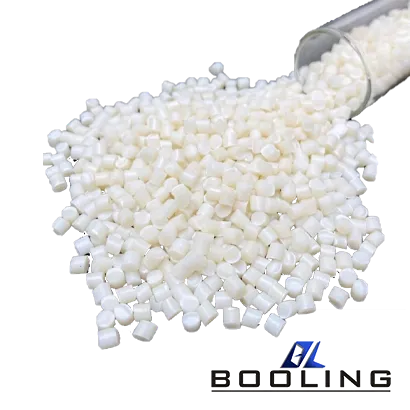
- ABS
- PE
- PP
- PS
- NYLON
- EVA
- Thermoplastic
- PMMA PMMA
- Silicone
- Rubber
- LSR
- TPU
- TPV
- TPE
Download more guides about our Injection Mold Services to get more tips and resources.
Our Other Process Services