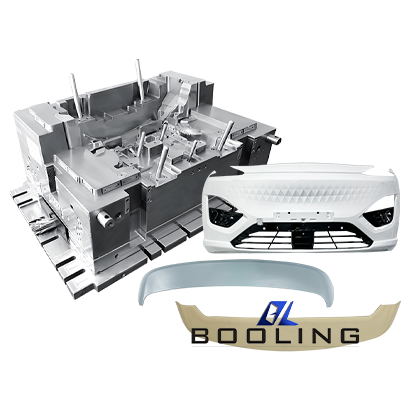
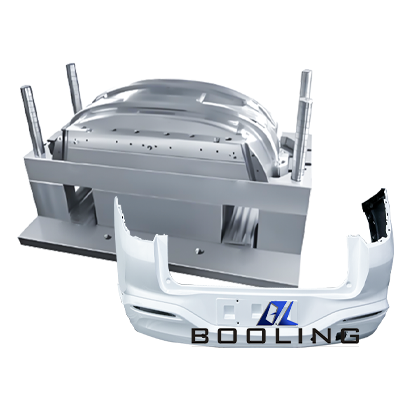
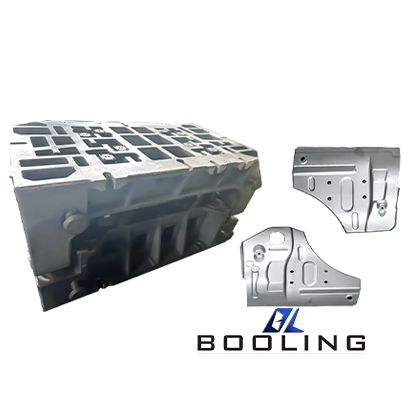
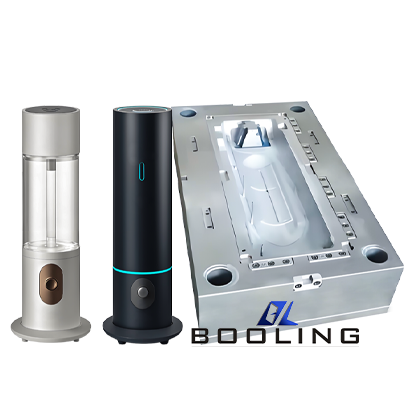
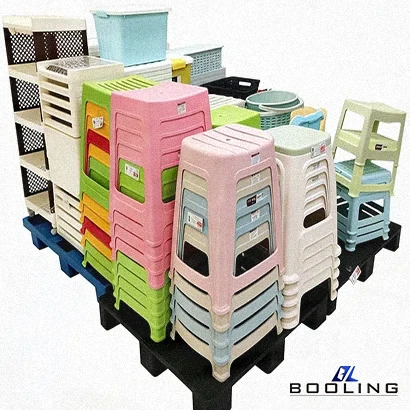
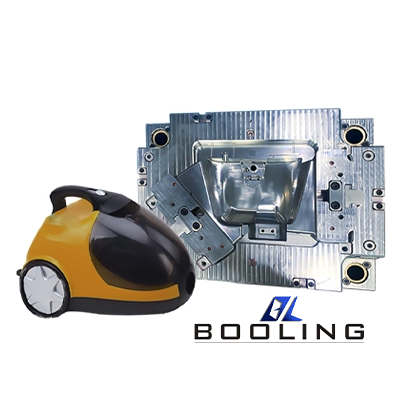
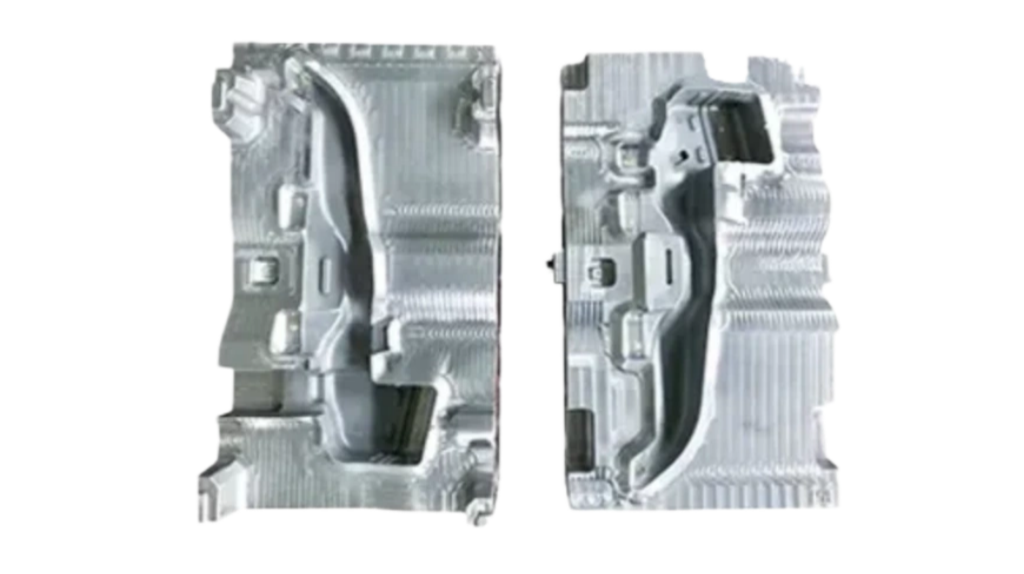
We offer mold manufacturing and plastic component production for a wide range of home appliances, such as refrigerator liners .
Blow Molds
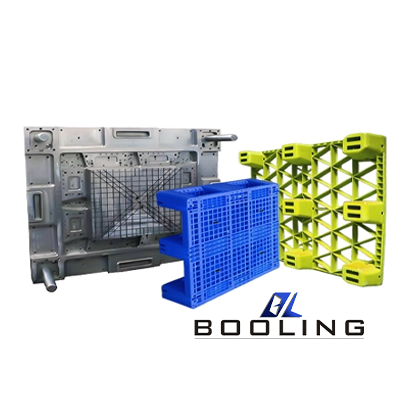
We manufacture tools that achieve over 500,000 shots, an automatic demolding rate above 90%, and produce blow-molded parts with uniform wall thickness and precise forming.
Our mold design provides complete mold design solutions for processes such as injection molding and blow molding. It reduces the number of mold trials, ensuring product consistency and stability in production.
Automotive Bumper Mold Collaboration Case
Booling's Mold Manufacturing Solution for Premium Automotive Bumpers
Booling supplied precision injection molds for front and rear bumper systems to a British luxury car manufacturer. The project required us to develop large-scale multi-cavity bumper molds, which can produce Class A surface components meeting the client’s strict criteria on fit & finish, panel gaps, paint adhesion and impact resistance.
Bumper molds rank among the most challenging categories in automotive injection molding. The part length exceeds 1,800 millimeters, with wall thickness ranging from 2.5 mm to 4.0 mm, alongside stringent surface quality requirements. Manufacturing such molds calls for in-depth expertise in material science, structural design and process optimization. Our engineering team addressed these challenges with a systematic approach combining simulation-driven design, high-precision CNC machining and rigorous quality validation.
Challenges And Difficulties
Large Part Mold Manufacturing and Dimensional Control
Bumper molds are among the largest injection molds in the automotive industry. The projected area of a single front bumper cavity can exceed 2,000 mm, requiring mold bases weighing 15 to 25 tons. Maintaining dimensional accuracy in such large cavities presents significant challenges—thermal expansion, uneven cooling rates and non-uniform clamping force distribution during the injection molding process can all lead to warpage, sink marks or dimensional deviations, which compromise panel fitment and vehicle assembly quality.
Class A Surface Finish Requirements
The exterior surface of automotive bumpers must achieve a flawless Class A surface finish; no visible weld lines, weld marks, sink marks, flash or surface imperfections are permitted. This requires SPI A1 grade mirror polishing of the cavity surfaces, precise positioning of hidden gates, and optimized runner design to eliminate weld lines from any visible areas.
Lightweighting and Structural Integration
The automaker required bumpers that reduce weight without compromising structural performance. This bumper project targeted a 12% weight reduction compared to the previous generation model, achieved through optimized rib structures, variable wall thickness profiles and an advanced material formulation (PP+EPDM+T20). The design process had to ensure uniform filling of these complex rib patterns while maintaining cycle efficiency.
Multi-Material and Accessory Integration
The bumper assembly integrates mounting brackets, sensor housings (for parking assist and radar systems), fog lamp openings and air intake ducts into a single injection-molded component. Some models require in-mold decoration (IMD) or in-mold labeling (IML) technology for color-matched trim strips. This demands precision slide mechanisms, lifting devices and complex parting line geometries.
Quality Validation
The automaker imposes stringent requirements on mold shot life: these molds must withstand over 500,000 injection shots with the shortest possible maintenance intervals. Furthermore, dimensional consistency must be maintained across the entire production lifecycle to ensure seamless integration during vehicle assembly.
Solutions
CAE-Driven Mold Design Optimization
Our engineering team leveraged advanced CAE software to conduct comprehensive mold simulations, analyzing filling patterns, pressure distribution, cooling efficiency and warpage potential. Through multiple design iterations, we optimized gate locations to eliminate visible weld marks on Class A surfaces while ensuring uniform filling across the large cavity areas. Potential air trap locations, sink mark zones and uneven filling issues were identified and resolved during the simulation phase before any steel cutting commenced.
Advanced Cooling System Engineering
The bumper mold cooling system was designed using conformal cooling principles wherever possible. Thermal simulation optimized cooling circuit layouts to achieve cooling times under 45 seconds while maintaining part flatness within 0.5 mm. This resulted in a 20% reduction in cycle time compared to the previous generation of molds.
High-Precision CNC Manufacturing
All cavity and core surfaces were machined using 5-axis CNC machining centers with a positioning accuracy of ±0.005 mm. Large-format CNC machines with table sizes exceeding 3,000 mm × 1,500 mm were used to machine the bumper cavities, eliminating setup-induced positioning errors. The final mold cavity surfaces were hand-polished by experienced craftsmen to SPI A1 grade (Ra 0.01-0.02 μm), with surface quality verified via digital profilometry.
Complex Slide and Lifting Mechanisms
The bumper mold integrates 8+ angled lifting mechanisms and 4 large slide units to form sensor housings, mounting brackets and air intake recesses. Each slide mechanism is equipped with self-lubricating bronze guide systems and integrated slide plates, ensuring reliable operation for over 500,000 cycles without maintenance intervention.
High-Volume Production and Consistent Quality
First Article Inspection (FAI) is conducted using a Coordinate Measuring Machine (CMM). Booling provides dimensional inspection reports, material certifications, mold trial data packages and ongoing production sample submission documentation.
Mold Design Services We Offer
Custom Injection Mold Services
We provide mold design services for injection molds, including gate design, edge gate, hot runner, and more.