Home > Custom Plastic Injection Molded Parts
Details
Details:
Model
Material
Brand
Origin
Application
Booling-Injection Molding
PP, PC, ABS, HDPE etc
Booling
China
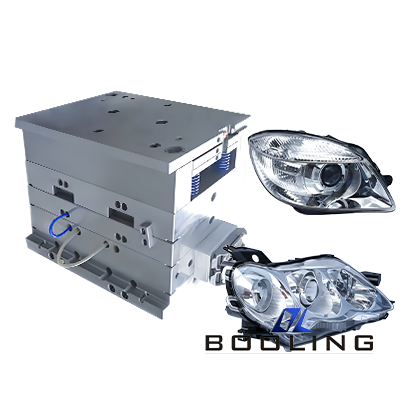
Automotive injection molded parts
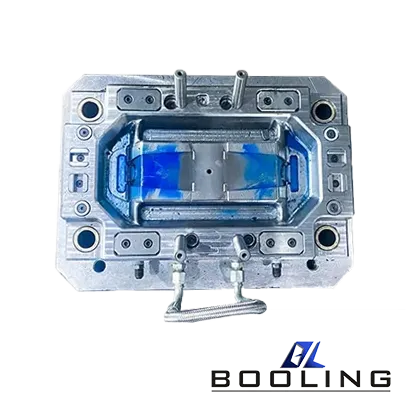
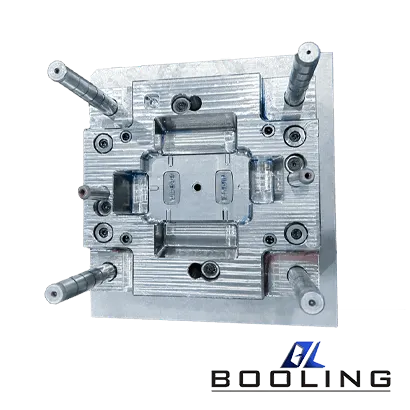
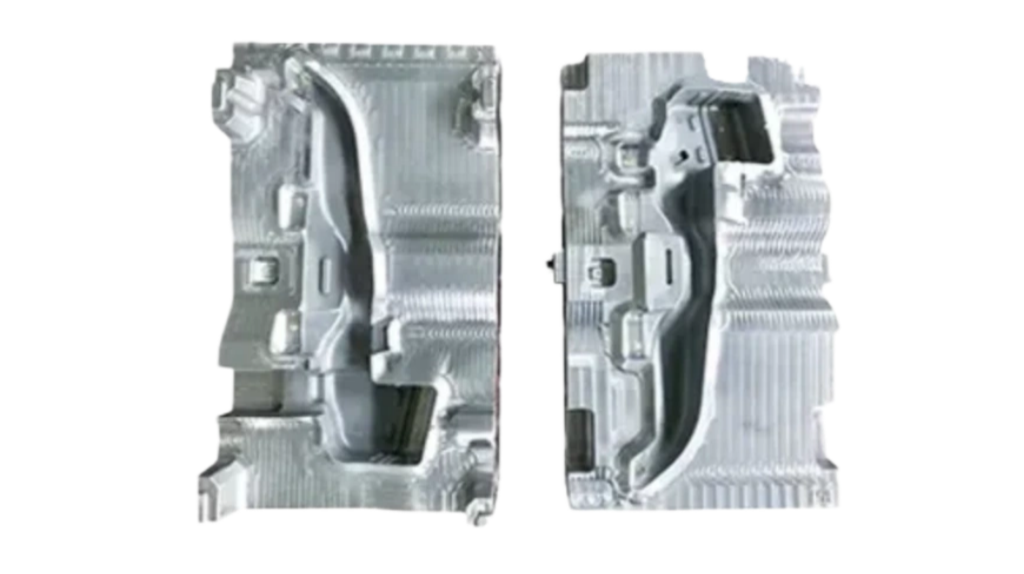
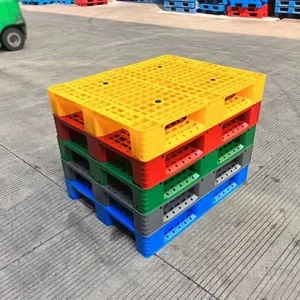
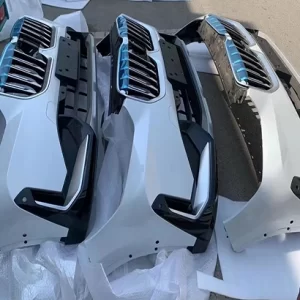
Plastic injection molding technology serves as the primary manufacturing method for mass production of custom molded parts, widely adopted in automotive accessories, logistics transportation and other industries. The injection molding process injects molten plastic into mold cavities via an injection molding machine, followed by cooling, shaping and ejection. Complex structural components can be formed in a single cycle. Mold steel selection directly affects the dimensional accuracy and production shot quantity of finished parts, and custom injection molded parts are extensively applied to manufacture components such as air ducts, bumpers and injection pallets in the automotive industry.
Advantages of injection molding:
- ISO 9001:2015 Certified
- DFM + Moldflow Included — CMM Report with Every Mold
- Quote Within 1 Working Day — Lead Time 30–55 Days
- In-house Mold Design & Engineering Team
Related Hot Products
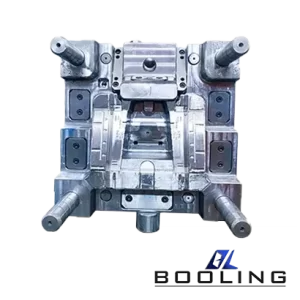
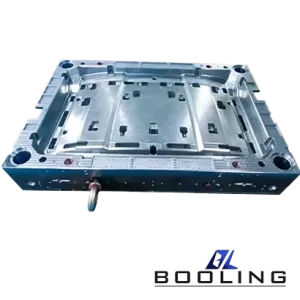
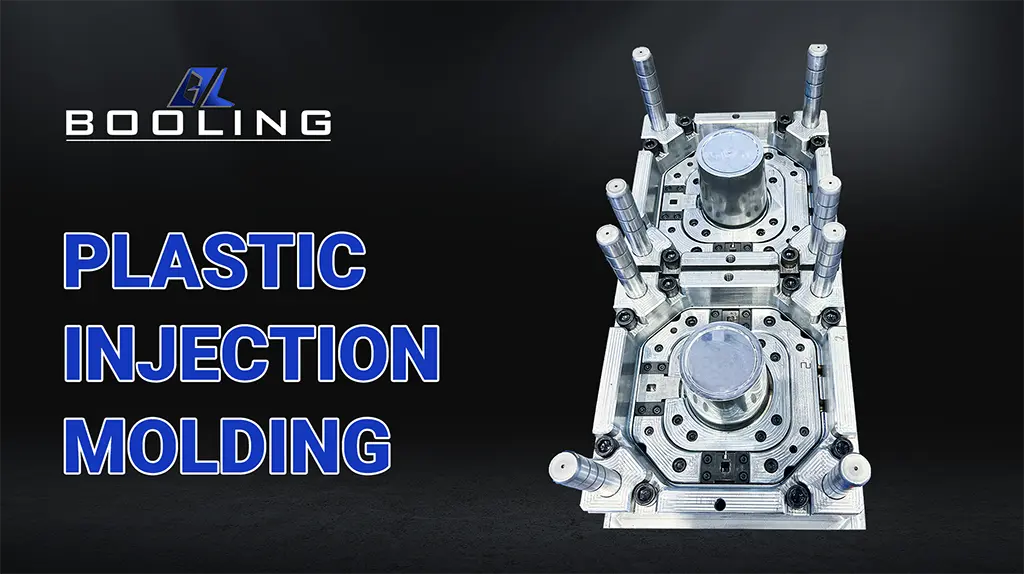
Injection molding is a process of manufacturing plastic products by injecting molten plastic into the mold cavity. Its core equipment includes three categories: injection molding machine, mold, and auxiliary equipment.

How Plastic Injection Molding Realizes Mass Production
The plastic injection molding process mainly relies on the screw rotation and propulsion of the injection molding machine. Heated molten plastic material is injected into closed mold cavities, then subjected to pressure holding for shrinkage compensation, cooling shaping and ejection demolding procedures. Complex structural parts can be finished in one molding cycle. Its core advantage in mass production lies in controllable single-piece molding cycle. The production cycle of ordinary parts is stably maintained within 30 to 120 seconds, and the specific molding duration depends on part wall thickness and cooling water channel design of the mold.
Control Mechanism of Plastic Injection Molding Process Parameters
Booling stabilizes the production of various plastic parts with wall thickness ranging from 0.5mm–6mm by adjusting injection pressure, pressure holding duration and melt temperature, meeting molding requirements of diverse products. When producing thin-wall parts, we activate high-speed injection mode with injection speed exceeding 300mm/s to avoid incomplete filling and material shortage caused by excessively long melt flow paths and premature cooling and solidification. The temperature difference between moving and fixed molds is strictly controlled during production within 5℃–15℃. Excessive temperature difference leads to uneven product cooling and easy warpage and deformation; overly small temperature difference slows down cooling speed and directly reduces production capacity. During actual production, Booling adjusts parameters according to product structures to guarantee product quality and production efficiency.
Mold machining precision directly determines the dimensional stability and surface appearance of finished products. The dimensional tolerance of cavities is controlled within ±0.01mm, and the flatness of parting surfaces is limited within 0.02mm to reduce common defects such as flash and sink marks.

Injection Mold Steel Selection Determines Part Molding Quality
Booling selects materials differentially based on the expected production volume of parts, plastic material characteristics and surface quality requirements.
P20 Pre-hardened Steel
Suitable for medium-volume projects within 100,000 shots with an as-delivered hardness of HRC28-32. It can be directly processed by CNC without subsequent heat treatment, delivering stable molding performance and high cost efficiency for general plastics such as PP and ABS. For engineering plastics filled with glass fiber, which cause cavity surface wear 3 to 5 times faster than ordinary materials, H13 and 2738 mold steels are generally adopted. Such materials undergo vacuum quenching to raise steel hardness to HRC48-52, combined with surface nitriding treatment to achieve a nitrided layer depth of 0.15 to 0.25mm, extending mold service life to over 500,000 shots.
| Component | Function | Design Considerations |
|---|---|---|
| Cavity & Core | Forms the part geometry | Material: P20/H13 steel (HRC 48–52) |
| Runner System | Channels molten plastic into the cavity (cold/hot runner) | Hot runners save 15–30% material |
| Cooling System | Regulates mold temperature (drilled/3D-printed conformal channels) | Temp. variation ≤5°C, cycle time ↓20% |
| Ejection System | Ejects finished parts (pins/air ejection) | Avoids marks (hidden ejector pins) |
| Vents | Releases trapped air to prevent voids | Depth: 0.02–0.04 mm |
Mainly used for processing transparent and mirror-surface parts. It features excellent corrosion resistance to prevent acid gas erosion during processing of materials such as POM and PVC. The surface roughness after polishing can reach Ra0.025 to meet ultra-high appearance requirements for finished parts. Mold machining processes include CNC rough machining, finish machining and EDM processing. A machining allowance of 0.05 to 0.1mm is reserved in the finish machining stage for manual polishing by fitters to reach the final required surface roughness.
| Type | Characteristics | Applications |
|---|---|---|
| Two-Plate Mold | Simple structure, low cost | General parts (e.g., bottle caps) |
| Three-Plate Mold | Automatically separates runner and part | Precision multi-cavity parts (e.g., connectors) |
| Stack Mold | Multi-layer cavities, doubles production capacity | Thin-walled packaging |

Application and Project Cases of Custom Injection Molded Parts in Multiple Industries
Custom injection molded parts applied in the automotive sector include instrument panels, bumpers, and pallets for the logistics transportation industry. Instrument panel components adopt PC or ABS materials. PC has heat resistance above 85℃~105℃, effectively preventing thermal deformation, warpage or abnormal noise of parts under direct high-temperature sunlight inside vehicles in summer. Bumpers and pallets are often produced with PP or HDPE materials. Relying on outstanding impact toughness, chemical corrosion resistance and high cost performance, these materials guarantee dimensional stability and load-bearing requirements of large-sized parts.
| Equipment | Function | Example |
|---|---|---|
| Dryer | Removes moisture (e.g., PC requires 120°C drying for 4 hours) | Motan dehumidifying dryer (-40°C dew point) |
| Mixer | Blends resin with colorants/additives | High-speed mixer (2000 rpm) |
| Feeder | Automatically supplies pellets to the hopper | Central conveying system (multi-machine) |
Booling undertakes customized production of the above categories of injection molded parts. Material selection is determined according to actual production volume and material characteristics. For high-volume parts filled with glass fiber, high-hardness steel molds such as H13 are adopted for molding processing to control cavity wear rate and ensure stable dimensional precision and quality of each part during mass production.
| Equipment | Function | Specifications |
|---|---|---|
| Mold Temp Controller | Maintains precise mold temperature (oil/water) | Range: 20–200°C (±0.5°C) |
| Chiller | Cools molds and hydraulic oil quickly | Cooling capacity: 5–50 kW |
Project Reference
| Equipment | Function | Example |
|---|---|---|
| Robot | Automatically removes, stacks, or inserts parts | ABB IRB 4600 (10 kg payload) |
| Deflashing Machine | Trims gates and flash | Laser cutting (±0.1 mm accuracy) |
| Inspection Equipment | Measures dimensions (CMM) and checks surface defects (AOI) | Zeiss CMM |
Key Equipment Selection Criteria
| Requirement | Selection Basis | Example Calculation |
|---|---|---|
| Clamping Force | Projected area × Material pressure (PP: ~300 bar, PC: ~500 bar) | 100 cm² × 500 bar ÷ 1000 = 50 tons |
| Shot Capacity | Part weight + runner weight (Screw diameter² × 0.785 × stroke) | Φ40 mm screw: 16 cm³/rev × 5 rev = 80 cm³ |
| Cycle Time | Dominated by cooling (Wall thickness² × thermal diffusivity) | 2 mm ABS part: 4 × 1.5 = 6 sec |
Automotive Mold Related Content
Applied’s expertise in modifying materials at atomic levels and on an industrial scale enables our customers to transform possibilities into reality.