Home > Blow Molding
Custom Online Blow Molding Service
Booling's Blow Molding Service
Booling focuses on quality control for complex hollow blow molded products and provides all-in-one molding solutions built for high-volume runs. Our services cover early-stage DFM manufacturability checks, CAE parison simulation, coordinated mold optimization and custom process calibration. We conduct full risk evaluation at the project outset to spot all potential molding issues and greatly cut unplanned downtime after production launch.
Mold tooling structures are designed around part geometry, melt material properties and finished molding specs. A common industry headache is generic standard tooling cannot maintain stable forming for complex hollow components. Early DFM checks catch design risks including poorly laid parting lines, turbulent melt flow and distortion-prone areas. CAE simulation predicts parison stretch, resin accumulation and wall thickness offset, so teams can repeatedly optimize cavity structures and process windows during design.
We combine digital simulation verification with strict on-site molding tests to solve two major mass-production pain points: inconsistent molding results between batches and uneven wall thickness. Our solutions help manufacturers lower molding rejects, reduce rework and scrap expenses, and achieve stable long-run production of complex hollow blow molded parts with consistent wall thickness for every batch.

Global Services
Access Booling's full manufacturing capabilities instantly. Wherever you are, we deliver solutions backed by technical expertise and global experience.
Available for immediate inquiry
Booling's intelligent system provides instant design assessment, delivering an accurate quote and reliable lead time—all within minutes.
Quality Assurance
Operating under ISO 9001:2015 and strict NDAs, our system provides clear visibility into project quality and progress—keeping your ideas fully secured.
Blow Molding Capability
| Parameter Item | Booling Standard (Imperial Unit) | Metric Reference |
|---|---|---|
| Maximum Overall Dimension of Molds for IBC & Large Hollow Containers (Limit of mold frame; length, width and height cannot be combined arbitrarily) | 82.7 in × 51.2 in × 19.7 in | 2100mm × 1300mm × 500mm |
| Recommended Safe Wall Thickness (Optimal range for impact resistance and leakage prevention of IBC tanks) | 0.08 in ~ 0.20 in | 2.0mm ~ 5.0mm |
| Minimum Limit Wall Thickness (Tanks will crack and leak easily during drop test if thinner than this value) | 0.06 in | 1.5mm |
| Maximum Depth of Parting Surface (Excessive depth tends to cause local thin walls and mold sticking) | ≤7.9 in; overall outline size shall be reduced for deeper structures | ≤200mm; outline dimension needs to be reduced for products with greater depth |
| Standard Dimensional Tolerance for Mass Production | Linear overall dimensions: ±0.020 in Local features such as bottle necks and mounting lugs: ±0.008 in | Linear overall dimensions: ±0.5 mm Local features such as bottle necks and mounting lugs: ±0.2 mm |
Blow Molding Application Scenarios

Automotive Blow Molding Parts
Most unstable quality issues come from unreasonable mold structure, improper parison control and mismatched process parameters. With rich experience in automotive blow molding tooling and mass production matching, Booling optimizes parison matching structure, clamping layout and forming processes. This greatly reduces common onsite problems including uneven wall thickness, air leakage and poor assembly tolerance, supporting stable and qualified mass production of automotive hollow parts.
IBC Tanks & Large Industrial Containers
Large hollow products like IBC tanks require long-cycle, high-volume production, where uneven cooling distribution can lead to shrinkage, deformation and dimensional instability.
Booling optimizes mold structures and cooling layouts based on product geometry and production requirements. By balancing cooling performance and improving wall thickness consistency, we help reduce trial adjustments and achieve stable long-term production for large blow molded containers.
Heavy-Duty Logistics Reusable Packaging
We upgrade mold structural design and match exclusive forming processes according to actual usage scenarios, effectively improving molding stability and product structural toughness. This helps customers steadily produce high-strength, long-service-life logistics hollow packaging products.
Blow Molding Materials
HDPE
Applicable Products: IBC tanks, large industrial hollow containers, chemical storage vessels, heavy-duty hollow turnover products, corrosion-resistant storage and transportation blow molded parts.
Core Features: Excellent impact resistance, outstanding chemical and corrosion resistance, stable material performance, uniform molding shrinkage. Well-suited for 24-hour uninterrupted continuous production with low deformation and cracking rates.
Material Selection & Application Guide: The preferred material for large-scale industrial blow molding projects. It adapts to high-strength, corrosion-resistant and long-term continuous production conditions. With stable molding performance and low machine adjustment frequency, HDPE maintains a high finished product yield. It is the optimal solution for heavy-duty and durable hollow products widely used in industrial storage, logistics and chemical supporting fields.
PP (Preferred Material)
Applicable Products: Automotive air ducts, vehicle pipeline accessories, lightweight functional hollow components, heat-resistant daily hollow products, automotive interior hollow parts.
PP provides lightweight characteristics, good heat resistance and stable molding performance. In automotive hollow part applications requiring higher rigidity and dimensional stability, Booling frequently uses PP+GF20% and PP+GF30% glass fiber reinforced materials to improve structural strength, deformation resistance and long-term performance.
Material Selection & Application Guide: Exclusive recommendation for lightweight blow molded products, mainly applied to automotive functional hollow parts and heat-resistant pipeline components. With low molding difficulty and high precision controllability, PP fully meets the strict assembly and service standards of automotive accessories, serving as the mainstream and cost-effective material for vehicle hollow blow molding parts.
ABS
Applicable Products: Structural hollow assemblies, equipment supporting structural hollow parts, integrated appearance & functional blow molded products, high-precision industrial hollow components
Core Features: Smooth surface finish, high structural rigidity and hardness, excellent overall structural stability after molding. It delivers reliable bearing capacity and high consistency for high-precision structural molding.
Material Selection & Application Guide: Ideal material for products requiring both structural strength and appearance quality. Specially designed for hollow assembly parts with dual requirements of surface texture and mechanical performance. It balances exquisite appearance and structural stability, perfect for high-end blow molded products with integrated equipment matching, function and appearance.


Whatever your needs, we have the solution.
Services Offered by Blow Molding Technology

Product Development
Mold Design
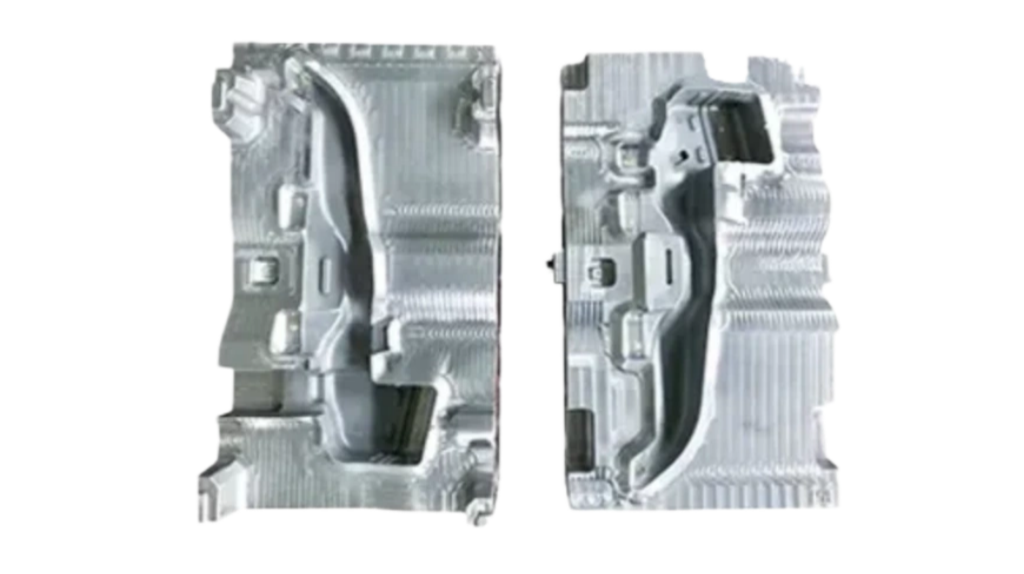
We develop high-precision custom blow molds for large hollow products including IBC tanks, 200L chemical drums and heavy-duty hollow pallets, preventing uneven cooling, bubble trapping and dimensional deviation during continuous production. We optimize conformal cooling channel layout, vent distribution, parison stretching ratio and cavity structural rigidity according to product load and volume requirements.
The finalized mold structure is confirmed before steel cutting. Compared with conventional mold design schemes, steady cycle time is guaranteed, daily production capacity is increased by 5%~8%, and long-term dimensional deviation is controlled within ±0.5mm for stable mass production.
Material Selection
We classify and screen blow molding grades including HDPE, PP, ABS material, PP and ABS, targeting common production defects such as chemical corrosion, low-temperature cracking, outdoor aging and poor surface printing performance. We match resin fluidity, impact toughness and barrier properties according to product storage medium, working temperature and service environment.
The most suitable material grade is confirmed before formal mold tryout. Compared with empirical material selection, product failure rate is reduced by 10%~15%, and post-production material cracking and leakage risks are eliminated for long-term batch operation.
Prototyping
We perform full-process in-house mold tryout to detect hidden defects such as weak weld lines, local material thinning and inconsistent wall thickness distribution on large hollow parts. We calibrate blowing pressure, extrusion speed and mold clamping clearance while recording complete molding parameter databases during sample production.
Fully qualified samples and inspection reports are delivered before shipment. Compared with traditional on-site trial debugging, the on-site trial iteration times are reduced by over 15%, and the overall mass production launch cycle is shortened by approximately 4-710 days.
Volume Production
We establish standardized mass-production process parameters for long-term continuous blow molding production, optimizing parison extrusion stroke, cooling time and blowing sequence to improve output consistency and wall thickness stability during high-volume operation. Auxiliary fixtures such as trimming jigs and blow pins are matched when required to maintain consistent molding conditions between batches.
Process windows are confirmed before mold delivery. Documented production parameters help reduce frequent adjustments and support stable production for standard industrial containers and hollow products. For standard container products, monthly output exceeding 3000 to 10,000 pieces can be supported.
After-Sales Service

Download more guides about our Blow Molding Service to get more tips and resources.
Our Other Process Services